
How Suburbs Are Fueling America’s Wildfire Crisis
Prefer YouTube? Watch it there.
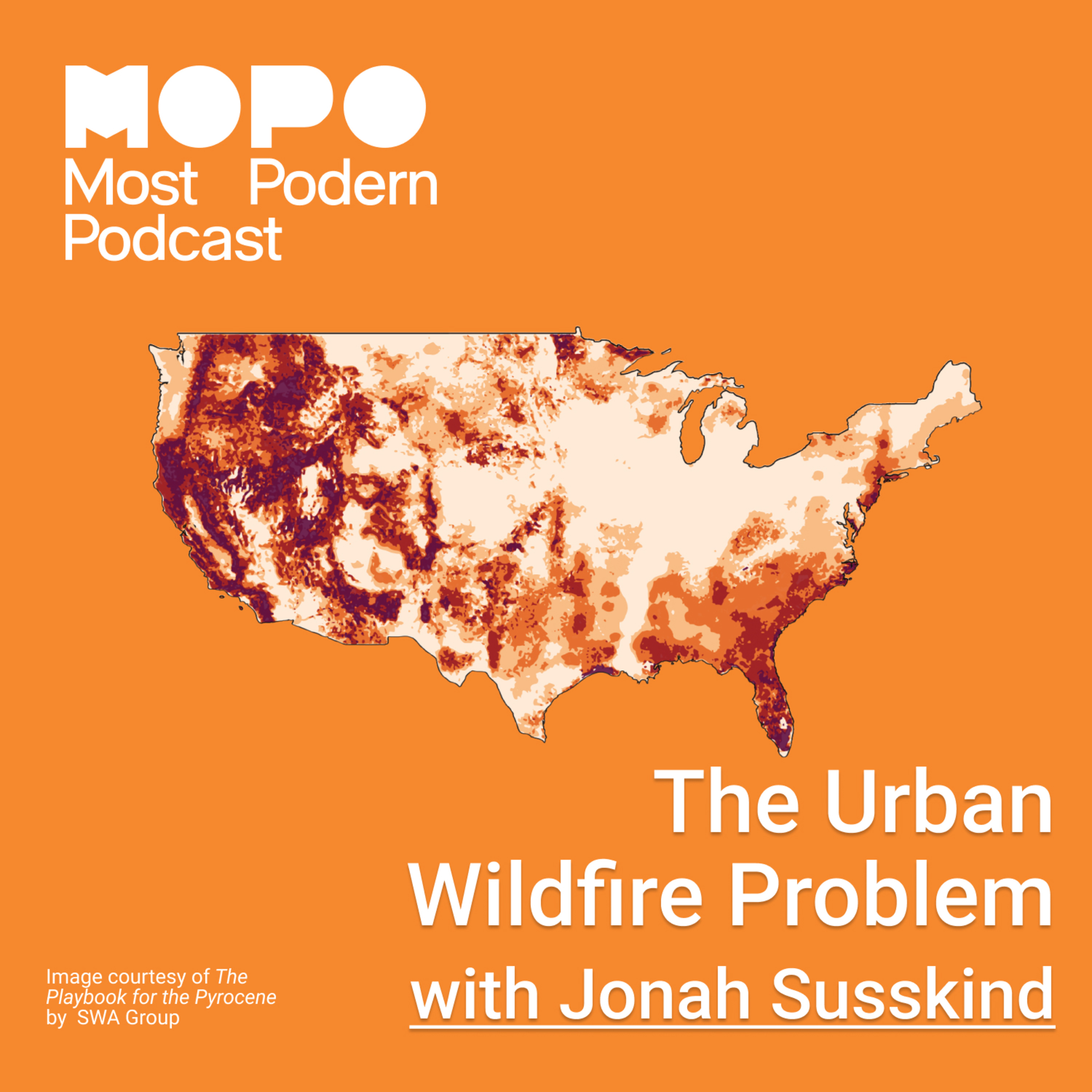
What happens when cities expand into fire-prone landscapes—and what can we do about it? Jonah Susskind, Director of Climate Strategy at SWA, unpacks the overlooked realities of wildfire risk, why most modern cities are spreading in all the wrong directions, and how smart design can turn parks, neighborhoods, and planning policies into climate-resilient systems. From the “wildland-urban interface” to shelter-in-place strategies, this conversation blends environmental science, urban planning, and design thinking to illuminate the future of where and how we live.
Chapters
- 0:00 Intro: Urban Futures in a Burning World
- 2:11 What Is a Landscape Urbanist?
- 5:24 Why “Natural Disasters” Aren’t Natural Anymore
- 8:16 What Is Wildfire, Really?
- 13:20 Smoke, Soil, and the Carbon Cost
- 13:44 Designing for Fire: Myths and Realities
- 16:10 Lessons from Australia and the U.S.
- 18:26 Who’s Responsible at the Edge?
- 19:30 What Homeowners Need to Know
- 21:54 Policy, Enforcement, and the Zone Zero Debate
- 25:36 Why We Need Local, Nuanced Research
- 30:56 Rethinking the Wildland-Urban Interface
- 33:10 The WUI: Conflict, Desire, and Inequality
- 37:12 Building Pragmatic, Resilient Communities
- 39:07 Why East Coast Listeners Should Care Too
- 42:35 This Moment: On the Precipice
- 44:12 Where to Learn More
Keywords
wildfire resilience, built environment, suburbanization, urbanism, architecture, landscape architecture, design, urban planning, climate adaptation, landscape urbanism, wildland-urban interface, Jonah Susskind, SWA Group, climate strategy, suburban development, wildfire design, zone California, fireproof cities, smoke exposure effects, urban development
Links
- Jonah Susskind swagroup.com/principals/jonah-susskind/SWA